
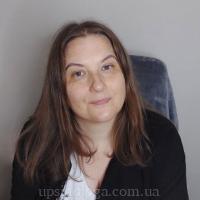
Yuliya Ushakova
Psychologist
1 000 UAH

An approach integrating physical sensations and body awareness into psychological healing.
“The body holds all past problems and traumatic experiences. This shapes our reactions, self-awareness, and capabilities. Even when we understand something intellectually, we may continue reacting in old, ingrained patterns that don’t align with our desires or actual outcomes. Fears, sensations, and emotions are embodied, and our life satisfaction and fulfillment depend on physical well-being. By working with the body, developing new skills, and training, we cultivate healthier responses and a more positive state of being. A healthy body fosters a healthy mind!
Body-oriented psychotherapy is a leading approach in modern practical psychology. It’s particularly valuable for those seeking change and personal growth, as the insights gained can be integrated not just mentally but physically into daily life («in» «flesh»). This method is accessible to everyone. During sessions, clients may engage in body-based techniques alongside traditional talk therapy. These techniques are simple yet carry deep psychological meaning: they help diagnose and reshape personal history more effectively. Clients gain a more objective self-perception, and what once seemed impossible becomes tangible. Reality becomes clearer and more grounded. As clients build confidence and strength within themselves, they’re motivated to apply these changes in their everyday lives.ААлексей Марченко
“The body always responds to emotional states. Negative emotions trigger muscle tension, rapid heartbeat, elevated blood pressure, and increased blood sugar and cholesterol levels. If emotions aren’t expressed, these changes linger in the body. Imagine the accumulated tension in someone who constantly feels anger, resentment, or fear.
The body-oriented approach is highly effective for addressing emotional challenges (irritability, self-doubt, phobias, panic attacks, health anxiety) and psychosomatic disorders (vegetovascular dystonia, heart disease, hypertension, diabetes, ulcers, etc.).
Emotional responses aren’t controlled by logic alone. Often, clients possess all the necessary knowledge and understand what needs to change, yet struggle to follow through. In critical moments, they revert to familiar reactions—anger, fear, or anxiety. This happens because rational understanding stems from the left frontal lobe of the brain, while emotions are governed by the right. Thus, a person may correct their rational approach but still need to address the emotional side. When working with bodily sensations, the right hemisphere of the brain—the one needing adjustment—becomes activated.
“Body-oriented psychotherapy is a gentle and pleasant approach to working with psychological trauma. It relies on subtle interventions that minimize frustration while maximizing a sense of well-being. This method is particularly helpful for those who struggle to experience joy in life or face difficulties with pleasure (anhedonia). The client typically lies down, focusing on their breathing and allowing the therapist to guide the process—though this can be challenging for individuals with hyper-responsibility or excessive control. We often discuss how physical tension forms, helping clients recognize what’s happening in their bodies: it’s not that their throat is constricted, but rather that they are suppressing tears. Many experience insights when they begin to perceive their body not as an object, but as a living organism. This is a resourceful therapy that restores energy and inspires deeper work with inner challenges. A 40-minute session often feels like a short retreat at a spa combined with physiotherapy. In my practice, bodywork is most effective when combined with analytical methods, as in my project "Body. Dance. Gestalt." I recommend it to everyone, especially pregnant women and those dealing with anorgasmia.ЭЭсина Энверовна Аскандарова
“The body holds memories of every life experience. It inevitably reacts to the joys and sorrows we encounter. When difficult situations arise, short-term memory may forget them, but the body remembers. In cases where memory fades but the body retains the experience, body-oriented therapy is used to bring these memories back to light. Subsequent therapeutic methods then help integrate these experiences into meaningful personal growth.
Psychologist
1 000 UAH
Certified Psychotherapist · Psychologist (Master)
2 000 UAH
Psychologist
2 000 UAH
Psychologist
1 200 UAH

Psychologist
850 UAH
Psychologist
500 UAH
Candidate Psychotherapist · Psychologist (Master) · Psychologist (Bachelor)
1 500 UAH
Psychologist

Psychologist
1 600 UAH

Psychologist
1 600 UAH
Psychologist

Psychologist
Psychologist
1 000 UAH
Psychologist
1 000 UAH

Psychologist (Master)
600 UAH
Certified Psychotherapist · Clinical Psychologist · Psychologist (Master)
6 600 UAH

Candidate Psychotherapist · Psychotherapy Trainee · Psychologist (Bachelor)
800 UAH

Psychologist
800 UAH
Psychologist
1 000 UAH
Organizer — Yuliya Lastik
Organizer — Lilia Kopeychenko
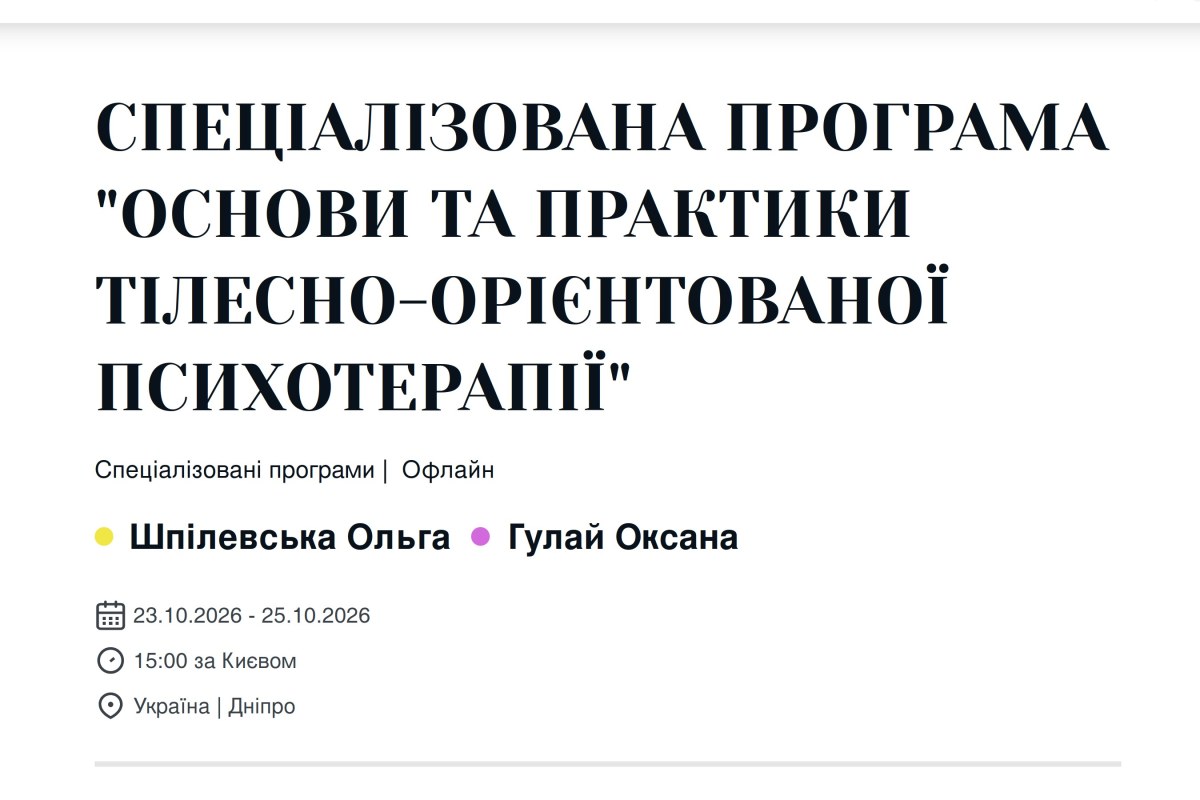
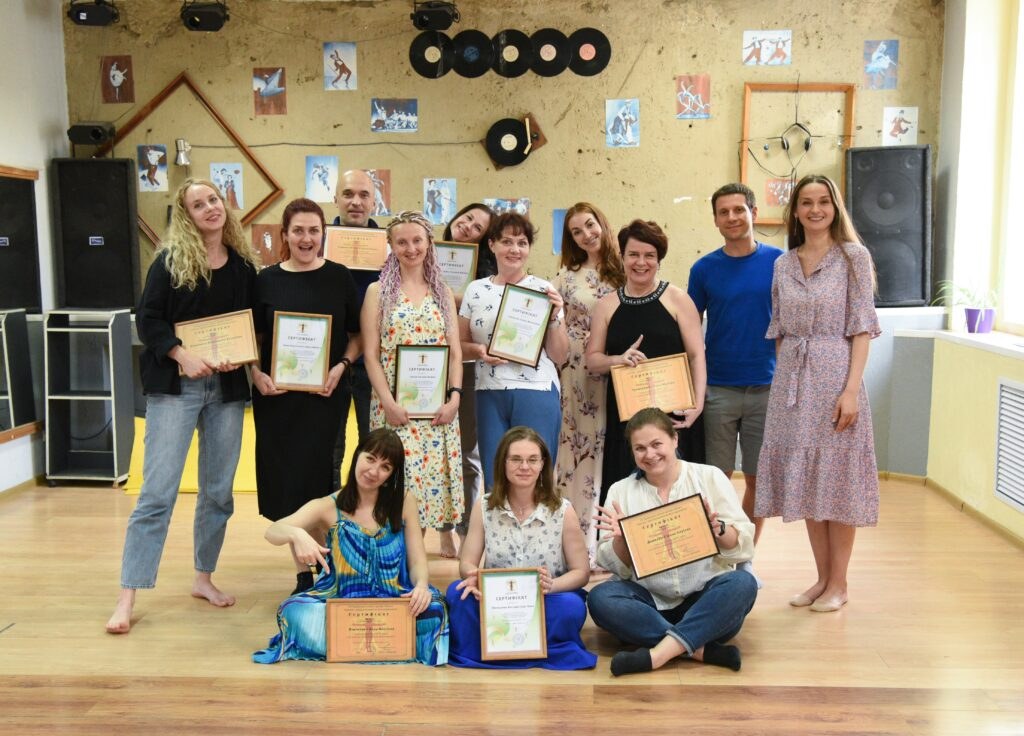
Organizer — MIGIS, Olga Shpilevska, and Oksana Gulay
Organizer — Iryna Kobyhno, Co-founder of USP TOP

Organizer — Фортунатова Оксана (сертифікований психотерапевт)
Organizer — Фортунатова Оксана (сертифікований психотерапевт)
Organizer — Андрій Флешель