

Detectives come in all forms. If it's a detective novel by John Grisham, it will focus more on psychological exploration than on police investigation.
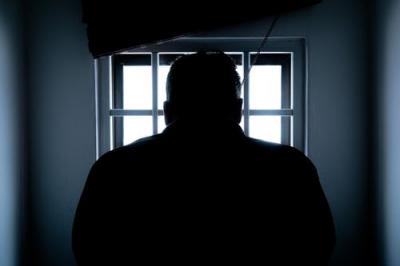
"The Chamber" is the death row cell where Sam Cayhall waits before being led to the gas chamber. The plot, in which a young hot-headed lawyer saves an innocent man from the death penalty, is nothing new, and each time we "root for the good guys." But what do we do with the usual division of characters into "good" and "bad" when the condemned man is guilty? Sam Cayhall, a member of the Ku Klux Klan, organized a bombing in which two five-year-old twins died, and their father lost both legs.
Why did the Ku Klux Klan members bomb Marvin Kramer’s office? Because, in the eyes of many people in the American South in the 1960s, it was considered a double crime. First, Kramer was Jewish, and second, he dared to actively advocate for the civil rights of Black Americans.
Sam Cayhall won two trials, but the third took place in America in the 1980s. "Officially, segregation was abolished forever. Many in the white community looked back and wondered: what was the war about? Didn’t society recognize equal rights for all its members?" (c).
Throughout the book, a young lawyer—Cayhall’s grandson and an opponent of the death penalty—tries to determine the extent of Sam’s guilt. After all, in his case, it’s not about justification but about the degree of guilt that could change the verdict and save a life. After all, there were three perpetrators, but the gas chamber awaits only Cayhall.
Now, Sam, who long fought to justify his actions, does not help the lawyer. It’s no use that he intended to blow up only the building and was the only one of the three who did not want to kill people—let alone children. He considers himself guilty.
The destructive power of hatred—this is the true subject of the investigation we conduct alongside Adam Hall. He is not Cayhall because his parents changed their surname (as well as first names, city, school, and job) because of the family’s past.
Hatred, which fueled Sam Cayhall, destroyed not only the Kramer family and the families of those he killed. Yes, he is far from the innocent victim the Ku Klux Klan forced to do terrible things.
This hatred destroyed Sam’s own family, contributed to his son’s suicide and his daughter’s alcoholism, struck at his grandchildren, and ultimately led him to the gas chamber.
Can state violence—particularly the death penalty—eradicate violence in society? This is another question the book’s characters attempt to answer, presenting arguments "for" and "against."
Adam, who rejects racism, tries to figure out whether Sam Cayhall had a chance to be different. And he answers himself: "No. He had no chance at all." Yet he admits that if he had been born into this family and environment half a century earlier, he would have become exactly the same.
The title of the book takes on another meaning—hatred of those who are different and violence become the chamber in which a person’s soul is imprisoned. Sam Cayhall agonizes over when and where he "took the wrong turn," especially since his grandson is so different, even though "the same blood" flows in their veins. In a letter to modern racists, renouncing the ideas of the Ku Klux Klan, he writes: "If not for the Klan, I would be a free man now" (c).