


I watched the film based on Shiku Shavier’s book Our Home. Well, what can I say—if this is what the “better world” awaiting us after death looks like, then I refuse to die. I’d rather suffer here than end up in a place resembling a totalitarian Italy from Mussolini’s era, sugar-coated and powdered. I’m not surprised by the film’s philosophy, considering the country that produced it endured over twenty years of military dictatorship. That explains the cultural models dominating the minds of Our Home’s creators. I’ll add that I haven’t studied Shiku Shavier’s work separately, but now I know which researcher to avoid. I also don’t want to think about my son ending up in the place this unknown Shiku describes after death. Better oblivion and total Nothingness than such dubious “pleasures.”
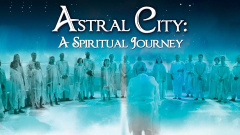
The film’s setting and atmosphere plunge us into the worst traditions of a totalitarian society. Let’s list the features that define the “afterlife city,” drifting through space among the stars and serving as a refuge for departed souls.
So, what do we see through the eyes of the protagonist, Dr. André Louis? Amid blooming meadows, picturesque lakes, grand buildings, and what seems like carefree lives of its residents, we notice that not everything is as “paradisiacal” in this “kingdom.” People here have virtually no choice. “High-ranking” “patricians” decide everything for them—figures that strongly evoke prominent figures of ancient Rome. These elite nobles possess enough pomp and cynicism to lecture “mere mortals” about their sins, condemn them, preach, and subject them to “spiritual” trials. Note that the floating city-millionaire has 72 ministries! And the absurdity of daily life here is such that a person can’t even press a computer key without personal permission from the relevant minister. It seems I’ve never encountered such harsh post-apocalyptic satire in cinema (perhaps it even surpasses Orwell’s 1984). You must work at any cost, even if you’re a hospital patient. Otherwise, the “patricians” won’t allow you to see your relatives still on Earth. But there’s another catch—if you recover even slightly and try to help other sick people, you’ll be kicked out of the hospital and left homeless. Because if you have the strength to work, you’re no longer sick! And so this confused, disoriented Dr. André, whom no one here respects, wanders the city, inspecting local homes and asking how one can buy such a house. The answer? You can’t. Housing here isn’t for sale. In fact, nothing here can be bought. Money doesn’t exist here. Certain benefits can only be “earned.” Surprise! It turns out labor isn’t rewarded here—it’s merely an emotional category. This means that to live decently, you must please someone. You have to “earn” a decent life. And if you don’t? Too bad.
Getting anyone to explain even the basics of local rules is nearly impossible. Everyone walks around with secretive expressions, avoids even simple questions, and the best way to shut someone up here is a peculiar “treatment”—hold water in your mouth and don’t swallow it! While the naive believer trusts their doctor and keeps the water in their mouth, the hospital staff mocks them and deftly avoids conversations with overly curious patients.
These and other moments in the film were so heavy for me and so contradictory to my inner philosophy of a free person that continuing to watch it was extremely difficult. However, I pulled myself together and forced myself to finish this “creation”—solely to write a review later and ponder what they’re “feeding” us. When I say “us,” I mean the audience this film’s theme might attract. I’m certain grieving relatives who’ve lost loved ones will go see it. Terminally ill patients may also try to make sense of it. I wouldn’t rule out religious viewers being drawn to this story either, as the Christian idea of original sin resonates strongly in the film. I’d say it’s the main theme of Shavier’s parable. You’re sinful even when you’ve done nothing wrong. Just like Dr. André Louis, the protagonist. What makes him a sinner? He healed people in his earthly life, was a decent citizen, a model family man, and didn’t shy away from charity. What’s wrong with him? Nothing! But in the afterlife, he’s a sinner—because he “indulged in the pleasures of this world.” So, as I understand it, eating and drinking was his entire sin. At this point in the film, I pushed away the crispy chicken drumstick I was munching on. But then I decided it was too late, so I pulled it back. The decision to surrender to my own sin won. Just kidding, of course. We’re only human, and enjoying food, drink, or other simple pleasures is so natural and human. But our poor doctor spent the entire film atoning for his earthly indulgences as best he could. In the end, he succeeded—after all, he was a ghost, and ghosts, as we know, don’t eat (lol). Yet how many manipulative attacks did he endure from the “managers” of various local ministries and departments! It was pure gaslighting, as they say now. The entire film, the protagonist was told his earthly life was lived “wrong.” Yet no one ever said how it should be lived. So the poor doctor wandered the city, asking everyone questions and keeping a diary—until the nobles found it, huddled together, and held a meeting, reading his most emotional entries aloud and savoring them. Evidently, his words impressed them, and the doctor was granted “freedom”—as a ghost, he was allowed to visit his grieving family.
What’s the moral of this tear-jerking, soul-crushing story? For me, it’s a film that instructs how to lose touch with your needs, stop respecting yourself, abandon personal freedom, let yourself be manipulated, and believe you’re “not okay.” I think this is the most cinematic embodiment of every dictator’s wet dream—a world of total control, forced labor, privacy violations, information blackouts, and brainwashing, where there’s no rule of law—only the “lord’s mercy.” Everything here is hyper-subjective. Where a person stops being human and becomes, literally and figuratively, a “ghost.”
Does it seem to me alone that no one has yet uncovered the harsh truths hidden behind the glossy, polished images of Our Home? Do you see them too?