

«— Princess, what does a woman want? Even after years of research, I can’t answer that question… Perhaps the two of us can find the answer?» — Sigmund Freud, quote from the film.
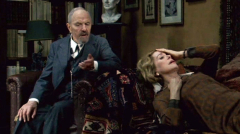
Want to know what psychoanalysis is? Quickly, easily, and interestingly?
The film Princess Maria Bonaparte is about that. Catherine Deneuve, in the lead role, brilliantly portrays one of the first female psychoanalysts.
This is a historical film. Against the backdrop of Sigmund Freud’s relationship with Maria Bonaparte—his analysand, later colleague, and friend—the events unfolding in fascist Germany before World War II come to life. The film is based on real events.
The story of the princess’s life, her character, and her fate—causes and consequences of events—reveals much that is interesting and important for analysis. Her courage, strength, and honesty in recognizing the motives behind her own and others’ actions cannot fail to inspire, as does her conscious use of her own power and unwavering pursuit of freedom. «In thoughts and actions.»
On one hand, we see the formation of psychoanalysis, the psychoanalytic society, and the relationships between leading psychoanalysts of the time. How rules were established, how they were broken, and how, thanks to that, modern psychoanalysts created a well-functioning system for setting boundaries, working with defenses and resistance, and much more.
On the other hand, the film reveals the process of psychoanalysis itself. A view from within, from the couch, with explanations of the causes and consequences of the process illustrated by the life of Maria Bonaparte. And in other cases, briefly mentioned but vividly demonstrating breakthroughs in treating and understanding many mental illnesses through psychoanalysis.
«— It seems I’m going to die. — Do you fear death or desire it?»
Another aspect is the historical backdrop against which the film’s events unfold. I believe the director infused it with deep meaning. Fanaticism and the complete enslavement of people by the fascist regime stand in contrast to the personal freedom that psychoanalysis brings. I think there are many more parallels to be drawn. But given the war currently raging in my country, I simply don’t notice them. Yet I vividly recall the insidious annexation of Austria, when people sent by Germany joyfully welcomed German troops into their country. I can’t help but draw a parallel with what Russia is doing in this war—it’s as if the spirit of war with Germany, like a baton, has passed to the very country that once prided itself on its victory.
Of course, the film is about life in all its manifestations—searching for the meaning of life, finding pleasure in sex and life itself, friendship and loyalty, aid and money, which can simply be a means of exchange.
I’ll conclude my review with a dialogue between Sigmund Freud and Maria Bonaparte. To my mind, it holds a deep meaning not only for this film but also for personal analysis and the meaning of life.
«S.F. — Your analysis was driven by frigidity. But your search’s goal isn’t pleasure—it’s freedom above all. You’ve almost achieved it. By being free in your thoughts and actions, you’ll gain freedom in pleasure, if you still desire it. You’ve left the dark shore where you once dwelled. A bright shore lies before you.
M.B. — I’ll never reach it.
S.F. — And who has? The important thing is knowing it exists.
…
S.F. — To unleash the forces of the psyche and find their best application. That’s what we must strive for. Is there anything greater in this world?
M.B. — You’re right. But to give up a sexual life for work… It frightens me. I can’t renounce it. And working is too easy. It’s much harder to find pleasure.
S.F. — Most people have it the other way around. Are they happier than you?»