


Joker. Three Layers of Tragedy
I watched Joker, and I urgently need to express my thoughts. So here’s a review with reflections.
First, you need to see it. Second, it’s terrifying. Third, CAUTION: SPOILERS AHEAD. And here’s a lot of text.
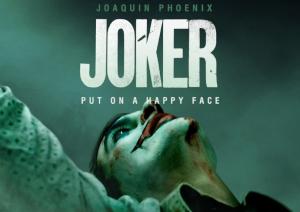
I see three layers in this film. A psychological thriller? Absolutely. An extremely realistic tragedy of an unhealthy person, a textbook story of how a psychopath, serial killer, or maniac is made—commonly speaking.
Poor Arthur was dealt all the prerequisites; he scored 100 out of 100 percent. We don’t know who his real parents were, because it turns out he was adopted. But there’s a chance his biological ancestors weren’t healthy either. Most likely, Arthur was genetically predisposed to illness from birth.
After that, there’s no guessing—Arthur’s adoptive mother and stepfather abused him. Prolonged emotional and physical violence. Most likely, the beatings resulted in an uncontrollable symptom that caused Arthur suffering and complicated his socialization—a forced, involuntary laugh. And, of course, no one could help Arthur learn to cope with such a complex version of himself.
Nevertheless, somehow, the hero stood on his own two feet. He’s poorly socialized in a terrible place, but he still earns some money, doesn’t end up homeless, and takes care of his elderly mother, to whom he’s attached. However, the place where everything happens is truly wretched. If someone’s falling, push them down.
Society doesn’t tolerate Arthur’s oddities, his defenselessness, or his vulnerable social position. The best he gets is indifference from a social worker—a woman who’s also exhausted by life, a burned-out case. The barely concealed disgust of those who witness his uncontrollable laughing fits. Trolling from someone Arthur admired from afar for years. Beatings. Denial of free medication amid social hardship.
Support? Nope, not a chance. Except for the kind gesture of a dwarf colleague—at least he understands Arthur better than anyone else. Poor guy, he’s clearly had his share of hardships too.
And slowly, terrifyingly, realistically, his mind slips, the threshold lowers, giving way inch by inch before collapsing entirely. Brilliantly acted. Oscar-worthy performance by Joaquin Phoenix!
And in a terrifying, grotesquely beautiful way, the awkward clown Arthur—with his movements, expressions, and laughter—becomes increasingly organic. What’s more, a horrifying, painful beauty begins to emerge in him. I don’t know how it’s conveyed, but he truly becomes beautiful in an ugly way—first in moments of breakdown, then more frequently. And the musical theme that accompanies these scenes sends shivers down my spine.
And this is about the psychological thriller.
A social drama? Absolutely. This film isn’t just about the progressive illness of one individual. It’s about the severe sickness of society. A society that, to its own misfortune, intensified the pressure on Arthur until it got Joker in return. And when it did, society reacted in line with its own illness—it accepted him as a hero, a symbol, someone to emulate and admire. Why?
I think this is a film about suppressed aggression. As long as Arthur doesn’t accept his anger, he’s awkward, “broken,” weak, and vague. He tries to “keep smiling.” People torment him for it, and no one will follow someone like that. He lacks an idea. He lacks wholeness.
When he fully accepts himself—in his madness and rage—he becomes terrifying, and there’s no awkwardness left in him. He’s ugly and beautiful. Now he has an idea; he’s whole, and people can follow him. He infects them with himself.
What is this idea? It’s the very thing society, choking on suppressed rage, tried to “squeeze out” of him and everyone like him. What long-suppressed anger, like Arthur’s laughter, explodes into crimson fury. The city burns, and its inhabitants wear identical clown masks. And above the city dances a clown, a jester, a trickster, Joker, the Devil—a completely archetypal figure with a smile painted in blood.
“He never cried. He was always happy,” says his adoptive mother. “I was never happy for a single moment,” admits the Joker. He’s happy at last, truly happy for the first time, watching the burning city. His rage has burst free. The city’s rage has too.
Here’s another layer of the film—apocalyptic in scale. Here, the Joker’s archetype becomes clearer. Here, it’s not just about the recipe for creating a serial killer but also about how to drive society to the brink in the same way. How wars and revolutions are made.
You just need to do to society what was done to Arthur. And you’ll get a society of serial killers, a society in severe psychopathy. A society over which the Joker dances. And it’s utterly, universally terrifying.