
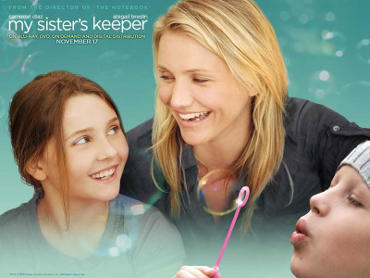
 The contemporary American author Jodi Picoult’s novel "My Sister’s Keeper" tells the story of a family where the eldest of three children, Kate, suffers from an incurable illness. At any moment, her life could come to an end.
If, after such an announcement, the reader prepares to root for Kate and accompany her in her fight against the disease, they are in for a surprise.
After all, the main protagonist of the book is not the eldest sister but the youngest, Anna, who was born specifically to be a donor for Kate. Neither her parents nor her biological brother met the strict requirements for genetic compatibility.
Kate’s parents love Anna; to them, she is not a "spare parts kit" but their beloved younger daughter. However… Anna did not choose to undergo endless medical procedures and surgeries. No child asks to be born. Anna is no exception. At an age when children wonder where babies come from, the girl is preoccupied with the question of why they exist at all.
When thirteen-year-old Anna files a lawsuit, the reader initially reacts with indignation. How could she? After all, granting her request would allow her to control her own body and refuse to donate. The lawyer asks whether Anna understands what would happen to Kate if her lawsuit were granted.
But then—another surprise for the reader. The story of the novel is told from the perspective of each character, viewed through their eyes. What initially seemed obvious takes on a completely different meaning.
Anna agrees to work with the lawyer on the condition that she does not have to appear in court. Yet she is forced to do so, and it turns out that she filed the lawsuit at Kate’s request. Anna loves her sister deeply and cannot imagine life without her. Kate, however, believes her parents would never agree to her request to stop treatment, which now only brings suffering. Kate is exhausted. She has lived 15 years longer than the doctors predicted. The girl simply wants "all this" to end. Anna and Kate are very close. Only Anna can understand Kate’s desire. And out of love for her sister, she files the lawsuit, believing that if they tell their parents the truth (especially their mother), they would be horrified and refuse.
Throughout the novel, the question lingers—do we have the right to decide for another person? How should they live, whom should they live with, and when should they die?
The novel has no one-dimensional "villains." As you read, you empathize with every character and realize there is no clear answer to these questions. Each person must choose how to respond, and each bears responsibility for that choice.
Yes, Kate’s mother, Sara, made her choice. But there is also her husband, Joshua, Anna, and life itself. On the day Sara promised Joshua to remove his braces and buy soccer cleats, Kate suffers a relapse. Sara, who has lived for years on the edge, sits frozen, unable to do anything. She breaks down. For ten-year-old Joshua, braces and soccer cleats are a matter of life and death! After his repeated plea, "Mom, you promised," Kate calmly tells her son that his sister is seriously ill. "I’m so sorry that we had to cancel the dentist appointment and the trip for cleats because of this. But that’s not the most important thing right now. I thought you were old enough at ten to understand that not everything in the world revolves around you," she says.
But Joshua is only ten. "Yes, of course. She’s sick," he says. "But why don’t you just grow up? Why can’t you understand that the whole world doesn’t revolve around her?"