


North Korea. For most of us, these words are associated with totalitarianism, absolute disregard for the individual, and the cult of the leader. It doesn’t matter what title the head of state holds: “Great Leader,” “Tsar,” “Beloved Leader,” or even “President.”
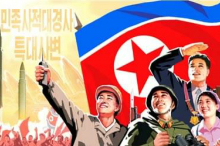 Since the start of Russia’s aggression, comparisons to North Korea have been heard more and more frequently in our language. Now they carry an additional nuance—hinting at the absurdity of such an extreme degree that simply cannot exist in real life. Like the boogeyman—oh-so-scary and evil, but impossible. The boogeyman doesn’t exist. But North Korea does. And what for us is an absurdity beyond comprehension—“doesn’t fit on one’s head”—is a daily nightmare for its citizens. A nightmare that warps human psychology and forces the instinct for self-preservation to work in strange ways.
The book by Jang Jin-sung (a pseudonym) is a rare phenomenon today. Not because of literary innovation, but because it tells a real story. The author managed to escape from North Korea. What’s more, he made it all the way to South Korea. At the time the book was published, North Korean intelligence agencies had not yet caught and returned him. May it stay that way.
While reading the book, you occasionally want to pause and check the blurb for the words “fantasy” or “dystopia.” After all, it’s impossible that in the 21st century, you could only travel within the country with special permission—not because of a “demarcation line,” not due to restricted zones, not because of zombie-infested areas (oh, that’s definitely fantasy). Imagine having to apply to the authorities for permission to visit relatives or a friend’s dacha. You’d have to justify the necessity of the trip. And even then, you might not get approval. As for the dacha—that’s not something you’d associate with North Korea.
It’s impossible that in a country whose social structure isn’t tribal-nomadic and isn’t located in a rocky desert, there could be famine. Real famine, the kind that makes people sick and die. And a kind hostess, to treat a guest, sets aside ten grains of rice from each family member’s portion in advance. I don’t know what’s more horrifying here: the food situation or the fact that the woman sees her action simply as one of the skills of a good homemaker.
Death penalty for stealing a sack of rice (doesn’t that sound familiar?). Punishment for “treason” isn’t limited to the “criminal”—three generations of their family will be punished. Concentration camps, information isolation, militant chastity, and hatred as the “correct” attitude toward everything Western.
Public displays of affection between a couple are considered unacceptable. Meanwhile, beautiful girls from the age of 13 are taken into a group unofficially called the “Pleasure Division” for the Beloved Leader.
At a reception for the Beloved Leader, a singer in “a white Western-style dress with bare shoulders” performs a Russian folk song. The man who behaves arrogantly and rudely toward subordinates and guests is moved to tears by the song.
Being invited to this reception is the greatest honor. Almost impossible for a young person (the author was 28). After it—only success and a guarantee of inviolability.
But for Jang Jin-sung, the path to meeting the Beloved Leader and attending the reception becomes the beginning of questions he cannot voice and shocking discoveries about reality.
Why, if this reception is for those personally selected by Kim Jong-il, do the escorts treat them like criminals? Why all the secrecy and security measures? Why can’t one look the General Secretary in the eye, only at the second button from the top? “At school, we were taught—and later constantly reminded by the party—that the life of our General Secretary is an endless series of divine miracles…” (quote). And it turns out the General Secretary suffers from foot pain and takes off his shoes when sitting at the table. “…Now I’ve seen his shoes with high heels and an internal platform no lower than six or seven centimeters.” (quote). When speaking, the Beloved Leader uses “crude slang,” not the “flawless language samples” the author was used to hearing in his speeches and reading in his writings.
The book by Jang Jin-sung is largely about the psychological and informational war waged by the state’s leadership against its own people. The author warns against a narrow view of the North Korean regime. When the world, accusing this regime, claims that “the system oppresses people and keeps them in submission through force.”
Kim Jong-il began his career as a creative worker. He became commander-in-chief of the army and head of the National Defense Commission without any military experience (if anyone sees something familiar here—that’s what Jang Jin-sung writes, not me). While agreeing on the physical control over people, the author emphasizes that Kim Jong-il “was a dictator in a subtler, all-encompassing sense: through his absolute power over the cultural identity of his people… he monopolized the media and art as decisive spheres of his absolute authority.”
Despite the inhuman acts and disheartening displays of human behavior that abound in the book, Dear Leader leaves room for justified hope. Hope that the human desire for freedom and self-actualization is a powerful force.
Among the circumstances that justified betrayal for the sake of self-preservation, the hero encountered people who simply could not act inhumanely or selfishly.
The protagonist’s personality evolves from an unconditionally devoted follower of the Beloved Leader to someone who brings true information about the North Korean regime to others and tries to hasten its collapse.
Carl Rogers said that in life, we take many risks. Jang Jin-sung, who now lives in Seoul and serves as editor-in-chief of the New Focus International news agency, still has no guarantee that North Korean intelligence services will leave him in peace. But he takes risks. Just as he once risked falling through the thin ice of the border river or being shot by border guards. After all, “a good life” (in Karl Rogers’ words) is only possible with freedom.