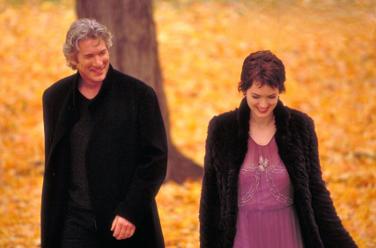



Psychological review of the film "Strong Woman (Riding in Cars with Boys)" based on the book by Beverly D’Onofrio

What happens when children have children? A role "collapse," the shattering of illusions and dreams, an all-encompassing sense of guilt, and the necessity of bearing the heavy "burden" of responsibility. This, among other things, is what Beverly D’Onofrio’s story in the film "Strong Woman" is about.
Young Beverly dreamed of enrolling in a literary college and becoming a writer. But her plans were put on hold when she became a mother at 15…
"You were special, but now you’ve ruined my life" — the desperate words of a father who learned of his teenage daughter’s pregnancy.
Parents, faced with the issue of teenage pregnancy, are left with many questions: "Why did this happen to my child?! After all, I did everything for them: raised them, taught them, invested my strength, money, and hopes… Why did my daughter choose this terrible path? I tried with all my might to protect her from this…"
Thus, Beverly’s father chose his own way of protecting his daughter from early "sinful" relationships — rejection and a ban on expressing her sexuality. And, ironically, it was precisely this that pushed the girl to seek a loving relationship where her interest would be accepted and supported. This, in turn, "bore fruit," and Beverly found out she was pregnant.
Wanting to atone for her "sin" before her parents and spare the family from "bad reputation," the daughter agrees to marry the father of her unborn child — a young but not very bright man named Ray, who had been addicted to alcohol and marijuana since his youth.
With the birth of their child, the young parents’ relationship becomes complicated. They play "ping-pong" with responsibility, shifting the care of the child onto each other. Each has their own infantile way of avoiding the hassles. Beverly is preoccupied with her professional future, unconsciously pushing the child away, ignoring its needs, denying her maternal role, and shifting responsibilities onto her parents. Ray is not ready for the role of family head, and he painfully experiences feelings of helplessness and his own insignificance, turning to his "doping" (alcohol and drugs) to help him endure the harsh reality more easily.
What happens to the child in a family of infantile parents? From a young age, they must act like adults, mature beyond their years, capable of taking care of themselves, understanding, and supporting their parents. In this role, it’s quite sad and lonely, but it seems to be the only way to get attention and feel needed.
The story ends on an optimistic note, with time putting family roles in their proper places, leaving behind a light, sad aftertaste about the irreversibility of the past. Another good social film about the trials and tribulations of parents and children.
"The heaviest burden that falls on a child’s shoulders is the unlived life of their parents" (© Carl Gustav Jung)