

The film explores what death can be. It doesn’t just frighten, disgust, alienate, or fade into oblivion. Death can create meaning where none existed before.
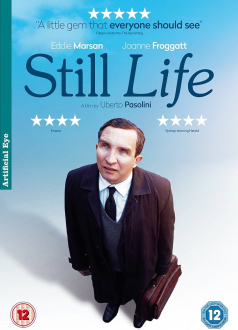
This is true for the already deceased characters, who only after death transform the lives of the living and give new meaning to the memories of themselves. This is also true for the protagonist, John May, brilliantly played by Eddie Marsan. John May works in an ungrateful profession—he cares for the lonely dead, those with no one to see them off. Often, after long and futile searches for relatives, John becomes the final witness to the end of these loners’ life journeys. He writes their eulogies, attends their burials, and only he preserves their memory, adding their photos to his family album. But what happens when all of this suddenly ends?
When the work is done and nothing remains, when you’re fired for "caring too much about the dead," when your home awaits only an untouched white tablecloth on the kitchen table, when you’ve even caught the eye of a girl and your eyes sparkle—none of it matters anymore. The character played by Eddie Marsan, filled with tranquility, makes a careless step toward a red bus and then, lying on his back on the asphalt, gazes into the sky in his final moments. He has nothing to regret. It could have been a sad ending, yet the world is not what it seems at first glance. We see how around the lonely grave of the protagonist, shimmering, uncertain figures begin to gather—these are the souls of the dead whom John cared for in life. It turns out that nothing is in vain if you do it with your heart. Even if you care for the dead. Everything you’ve done remains with you.
For me, this film carries several messages. First: a career is not about how you prepare for life. In reality, a career is your preparation for death. Second: you can be lonely in life, but death removes that limitation. Third: if you are connected to someone, death does not exist.