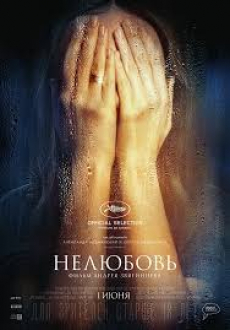



The film, initially advertised as a criminal drama, transforms during viewing into a detective story and later into a family drama.
There are numerous questions regarding criminology and jurisprudence in the series. Seemingly mundane negligence in laboratory work, such as inaccuracies in weapon descriptions or the depth of fatal wounds, raises doubts.
This plot is disorienting. But it soon becomes clear that the focus should not be on the genre but on the relationships.
The director focuses not on legal mechanics but on the accompanying psychological torment. Not on the ecosystem of a single cell of society, but on the individual existential struggles of each family member.
A slow-paced script, with events revolving around the investigation throughout the film, constant courtroom scenes or scenes in the Barbers' home, minimal effects, and an open ending.
Everything revolves around the relationships within one family, set against the backdrop of a sudden tragedy. Their teenage son is accused of murdering a classmate. Everything that once defined the family is turned upside down.
Superficial gloss and outward closeness. A successful prosecutor and a creative gallery owner. "I love you" at every farewell. Family evenings and knowing each other's business.
But what lies beneath those relationships?
Can parents, blindly in love with their son, see reality?
Not physically see, but truly perceive not the imagined child, but the one they actually are?
A subtle reminder that as part of a family system, it's impossible to see the entire system as a whole. You cannot be your own psychologist. Because in the family, you exist in a different identity. You are not a psychologist. You are a mother, a father, a son.
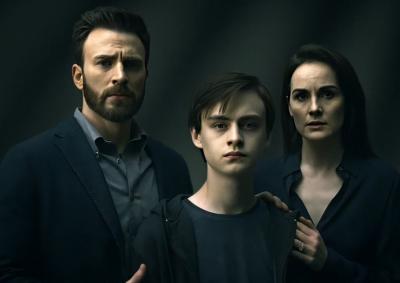
As is often the case in narcissistic families, there is a massive skeleton in the closet. It is carefully hidden behind perfect relationships and significant professional achievements. How much effort is required to protect the secret? And at what cost is this psychological process maintained? A heavy, shameful, and disgusting secret. A person believes that if no one knows their story, it does not exist. In the process, they begin to embody that imagined personality themselves.
The mechanism of denial is well illustrated. If I don't see it, it doesn't exist.
I believe such films help people cope with their own problems—not in the style of "thank goodness it's not me." When you see people with quite serious, complex issues and their path—one that is not always filled with hope—you realize that the journey involves various experiences and difficulties.
It's a sense of connection with others. You are not alone; your struggles are not unique. It gives strength and confidence. The experiences of others help, provide hope, and reduce fear.
The question of mental illness lingers throughout the film like a lingering ailment. Just as mental illness itself is ambiguous and viscous.
Is it disgusting, shameful, dangerous, and unpredictable? Or is it genetically predictable, scientifically explainable, and fully controllable in modern medicine?
In the film, the protagonist searches for the "murderer's gene," which he believes he inherited from his murderous father.
It evokes both pity and hatred.
Fear and rage.
And that unspoken question: why? What for? How do you live with this?
In my view, the ambivalence of normalcy and pathology, diagnosis and health. Depending on what is considered normal, what standard is used to measure it, and what truth one chooses to believe.
It is a given that we must accept the complexity of the human psyche and the limitations of precise psychiatric diagnosis. Not all questions have clear answers. Such is life.
The film is useful for parents who, with their magical thinking, mistakenly believe they know their children well. Guided by the same mechanism, they overlook obvious red flags, hoping to have perfect children. Because if my child is perfect, then I am a perfect parent.
And for teenagers as well. Still inexperienced, they do not understand where the line lies between innocent pranks and disorders. They follow social trends and clique rules, wanting to be cool. They choose to be that way online. In the process, they forget—or never learn—that everything posted online leaves a trace. And at the most inopportune moment, it resurfaces. What you perceive as an innocent joke can turn into a tragedy.
I recommend watching it.