

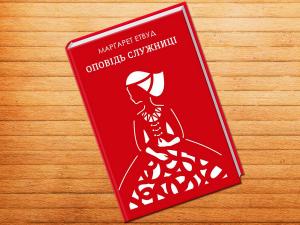
The dystopian novel The Handmaid’s Tale by Margaret Atwood remarkably illustrates how fragile the achievements of human civilization truly are. It shows how easily society can regress into a "dark age" even while still using modern technology. How one can fail to notice the ominous changes unfolding in society, only to wake up one day to a completely different reality—one where survival becomes the top priority. And if you find something worth surviving for.
One morning, women across the country woke up to find they had all been fired from their jobs—regardless of their positions, experience, or status. Their bank accounts were frozen. No, the money hadn’t disappeared—it was now controlled by the men in their lives: husbands, fathers, brothers. A quiet military-religious coup had taken place in the country. A return, as it were, to "the good old days."
Under the pretext of caring for them, women were stripped of their right to vote, forbidden from working, owning property, or receiving an education. Reading and writing were outlawed. A woman caught turning the pages of a book would have her reading finger severed. Those caught writing would lose a hand. A woman’s sole "biological duty" was to become pregnant and give birth.
Books, diplomas, modern clothing—everything was burned. Now, the cut and color of a woman’s clothes signaled her social status, with especially harsh restrictions placed on women.
A woman’s value to society was now determined by the functionality of her ovaries. There were still the "Marthas"—those who couldn’t bear children but handled household chores. As the Handmaid explains, they fought for this role. Yet in the new reality, not all were satisfied with the outcome of their struggle. Among the disillusioned was the Commander’s wife, one of the leading advocates of the new order. The worst fate, however, was to be labeled a "Unwoman."
The author brilliantly captures the psychology of a person under extreme pressure, living in constant stress, adapting to survive. Not much time passes in human terms since the coup, yet the protagonist—a modern young woman, formerly a deputy editor at a glossy magazine—already feels shocked when she encounters tourists from another country. She sees them as shockingly underdressed, wearing light summer blouses and skirts just a few centimeters above the knee! She, on the other hand, is now forced to wear long dresses that touch the ground.
The Handmaid’s Tale has an excellent screen adaptation in the form of a series. However, due to the nature of the genre, some key elements of the book are simplified for the sake of spectacle. Some critics have accused the show’s creators of making the protagonist unattractive, with limited facial expressions—her reactions to everything appearing the same: a red nose, swollen lips, and tears welling in her eyes. But from a psychological standpoint, such a physiological response is typical for someone living in conditions of imprisonment, humiliation, and loss.
A mask-like face, limited facial expressions, and heightened tearfulness—all of these are the result of a nervous system exhausted by constant stress.
The protagonist is nothing like the typical female action heroes—those with sculpted muscles, visible abs, and the ability to fight off three special forces operatives at once. Her physical training consists of morning jogs with a friend to maintain her figure and well-being, not for combat. Her character isn’t "special forces" either—she’s just an ordinary woman. Yet she must survive. And even when life becomes unbearable, she cannot give it up. Suicide isn’t as easy as it seems. Everything that could be used to take her own life has been removed from her room. She is rarely left alone. She doesn’t even have a name of her own. She is called by the name of the Commander she serves—Offred.
She has a reason to survive. There’s a goal: to find her child, who was taken from her.
Handmaids—with a capital H—are not servants. They hold a status. These are women who, by health, can bear children (near-total infertility is a consequence of an environmental catastrophe). She lives in the Commander’s household and has three chances to become pregnant and give birth. It’s a twisted version of the biblical story of a barren wife and a handmaid bearing a child. If she succeeds, she’ll be freed from her duties. If not, her path leads to the colonies.
No, she is not a concubine. There’s no sex, let alone eroticism or physical intimacy. Handmaids are never left alone with Commanders. Only technical insemination in the presence of the wife, with the sole purpose of conceiving. Inability to conceive is entirely blamed on the woman. Even suggesting that the man might be infertile is a crime.
In this country, where the law now operates in reverse, almost everything is a crime. Most "crimes" are punishable by death. You can be executed for actions that were legal before the coup. Scientists and doctors who performed abortions in civilized times are among those executed. Contraception is also a crime. Choosing a sexual orientation other than heterosexual is considered "gender treason," a horrific crime.
As for status, a woman supposedly has a choice. You can refuse to become a Handmaid and end up in the colonies, cleaning up radioactive and hazardous waste from an environmental disaster—without any protection. Death would be agonizing.
Some critics of the book have questioned why the protagonist doesn’t fight back. Why, if she were to attempt suicide, she wouldn’t take an enemy with her.
It’s easy to reason this way when you’re safe, when you have friends or acquaintances to share your struggles with. For someone living under constant pressure, violence, and humiliation, there’s another enemy: loneliness. There’s no one to confide in about this horror. The Handmaid assigned to "keep her company" (supposedly to prevent boredom) is actually there to monitor and report on her. And she knows it too. So heart-to-heart conversations are dangerous.
You must be devout, yet you’re forbidden from reading the Bible. The Bible is kept by the Commander, the master of the house, and only he can read it to his household. Or rather, not the whole text—only "approved" excerpts. Knowing the full text is forbidden. Distributing the full text in a religious (!) country is a crime.
The inability to control one’s own fate and the uncertainty of the future are typical of this life. Our Handmaid doesn’t know what became of her friend. Whether her husband is still alive. The reader is left to guess the protagonist’s fate. The narrative cuts off as a sinister black car arrives for her. In the new order, people simply disappear.
A line from The Handmaid’s Tale rings especially true today: "Nothing happens all at once." The protagonist bitterly remarks that they didn’t see it coming, didn’t want to see it. How people in semi-military uniforms began appearing on the streets. How certain themes started dominating the news. How a woman in athletic wear was met with disapproving glances. And then, one morning…