


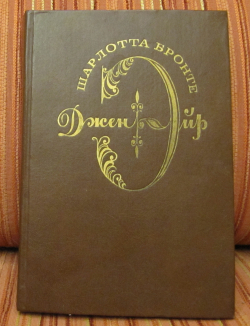
 Charlotte Brontë’s novel Jane Eyre is often casually dismissed as one of those love stories—or what are called "women’s novels." It seems straightforward: there’s a hero, a heroine, love, obstacles, and a happy ending.
But in reality, this is far more a novel about dignity—about how one can remain true to their moral values and still retain personal freedom, even in circumstances that might objectively justify self-betrayal.
For readers interested in the reasons behind human actions, the impact of childhood events on a person’s life, and the ability to take responsibility and cope with the consequences of one’s decisions, love in the novel is merely the "cherry on top."
Much of what Brontë so perceptively captures is now confirmed by scientific research and even has specific names. Examples include "family scripts," "manipulation," "sibling rivalry," and "cross-cultural conflict."
The protagonist is an "awkward child." Her presence in her aunt’s household exists only because of a promise extracted by Mr. Reed from his wife on his deathbed. Mrs. Reed had no desire to raise Jane or accept her as part of the family. While her negative attitude might have softened over time, Jane’s unattractive appearance works against her. Even the servants favor the pretty little Georgiana, despite her spiteful nature. "…if she had been a pretty, good-tempered child, one might have excused her for having no one in the world to love her. But who is going to pity such a repulsive little toad!"
— "True, very few," agreed Bessie. "It’s clear that a beauty like Miss Georgiana, in the same situation, would have much more appeal." (c.)
Charlotte Brontë was unaware of modern psychological studies that confirm her observations, but we are now well acquainted with them.
Ten years after the little girl was locked in the "red room," the effects of that stress still linger. Today, we recognize this phenomenon as psychologically grounded.
With the adults around her indifferent to her education and development, the heroine shows a keen interest in reading. In the Reeds’ library, Jane independently—what we would now call "self-directed learning"—seizes the opportunity for her own growth. The prospect of radically changing her life by attending school does not frighten her (though she has no clear idea of what it entails). On the contrary, the maid’s stories about the accomplishments of young ladies who gained knowledge at school awaken in Jane a "spirit of competition." School also represents "a distant journey, a complete break from Gateshead, a transition to a new life." (c.)
In her new life, everything is unfamiliar, even hostile. Mr. Brocklehurst’s discipline is designed to break children, which he calls "training in humility." But the small, unattractive Jane does not break. She does not allow bitterness to destroy her.
The heroine describes herself as willingly submitting to reasonable authority. And she scorns the shameful crown placed on a friend’s head by authority at Lowood. She does not consider this authority reasonable. Among Jane Eyre’s moral values, there is no place for anarchism. She respects authority but decides for herself whether it is reasonable or not, and whether to submit to it. Each time she faces a display of power, the novel’s heroine makes her own conscious choice. This is no task for the weak.
Jane Eyre can rightfully be called a strong personality. Without hysterics and with respect for others, she takes responsibility for her own life.
As for the hero, despite his romantic appearance, mysterious aura, and tragic fate, it’s hard to call him a strong personality. Yes, he loves Jane. But his way of navigating life involves manipulation and hiding the truth. His fiancée learns on her wedding day that her beloved is already married. She nearly becomes entangled in a serious crime (by law).
Before proposing to Jane, Rochester manipulates her into feeling jealous of Miss Ingram. The governess endures pain and begins searching for a new position. She knows she cannot stay with her beloved once he is married to another woman.
Rochester manipulates Miss Ingram, making her believe she is about to become his bride. When Jane expresses concern for Miss Ingram’s wounded feelings, the "groom" calmly replies that all her emotions are merely pride—something that must be tamed. He doesn’t even consider that Miss Ingram’s suffering remains.
We experience Jane Eyre’s story alongside her. We only know Mr. Rochester’s story and his marriage from his own words. His account evokes genuine sympathy. We feel for him as a victim of terrible injustice. But in every conflict and family tragedy, two sides are involved.
Some modern authors have attempted to explore Mr. Rochester’s first marriage from the perspective of his first wife, creating prequels to Jane Eyre. In their books and the film Wide Sargasso Sea, Edward’s wife is portrayed from her own point of view. There, Edward does not appear as the pure, fluffy hero we imagine—especially when a cross-cultural conflict is at play.
Edward Rochester had no experience paying attention to or listening to another person’s feelings. His own emotions were neglected in his family, which may explain why it was so easy to marry him off to a passionate beauty. For her, marriage also turned into a tragedy.
When he begs Jane to leave with him after the truth is revealed, the lover once again resorts to manipulation and disregards her feelings. His only desire is to be with her! Why do we call his behavior manipulation? Because manipulators appeal to a person’s best emotions while hiding the truth. Mr. Rochester does not tell the girl, "Go against your moral values. They don’t matter to me. Become a society outcast, for whom, after this love story ends, there is only one alternative: either take your own life or turn to prostitution. A man’s reputation is barely threatened by such stories—in fact, they sometimes add a touch of spice."
The manipulator strikes at her "pain point," and Jane begins to waver when he says, "You have no one you could hurt by living with me." This is true, but not entirely. So she answers herself: "I would hurt myself. The deeper my loneliness, the fewer friends and support I have, the more I must respect myself." (c.)
Jane’s refusal sparks a flood of rhetorical questions from Rochester—again, all about himself: "Think about what awaits me when you’re gone." (c.)
The way the hero and heroine react to loss is also strikingly different.
What does Jane do when she is left alone in an unfamiliar place, without belongings, money, documents, or hope of seeing her beloved? She builds new relationships, seeks to be useful, works, takes pride in her students, and plans her future.
What does Edward Rochester do when he is left half-blind, a widower (finally!), with wealth, servants, a loyal dog, and a home? He isolates himself, neglects his appearance, sends Adele to a distant boarding school where the girl suffers, and wallows in misery.
After such an analysis, a natural question arises: how could the strong Jane choose such a weak Edward? Let’s now examine Jane’s family script regarding female behavior and the choice of a husband.
Jane does not remember either of her parents. A male role model could have been provided by her uncle, but he is absent from her life as well (he died). Among the men in Jane Eyre’s circle, the only one is Mrs. Reed’s fourteen-year-old son—a weak-willed and deceitful boy. Jane is ten. At that age, a four-year difference is huge. To the girl, he is almost an adult.
Thus, we can say that Jane has her own model of female behavior: her aunt, who makes all decisions herself and dotes on her son. In this case, the son represents the kind of man a woman might choose.
At the beginning of the novel, ten-year-old Jane Eyre welcomes change. By the end, the heroes achieve their happiness after changing and accepting their losses. The married couple Rochester, as described by Charlotte Brontë, represents a union of two equals. Interestingly, the author does not end the novel with a lavish wedding, because that is when a new life truly begins—as husband and wife. The marriage must mature. The heroine reflects on her marriage when it is ten years old. The number ten is symbolic.
"To be together means for us to feel as at ease as in solitude and as joyful as in company… I trust him completely, and he trusts me; our characters suit each other perfectly, which is why we live in harmony."