
When to End Therapy?
In Therapy


When should therapy end? I mean therapy for mentally healthy individuals who occasionally face psychological difficulties, challenges, and problems - not to be confused with therapy for patients with mental disorders.
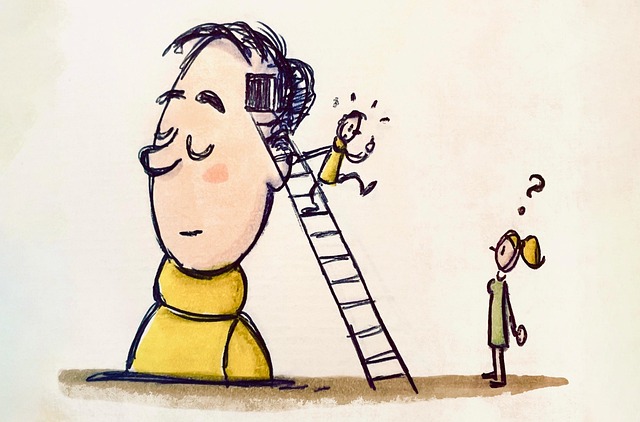
It’s worth noting that among professionals, there are certain disagreements regarding the answer to the question in the title. Yet it’s far from trivial. On the contrary, it’s of fundamental importance.
In the ranks of therapists, however, there are essentially diametrically opposed views. Some consider therapy an endless process, something that, in spirit, is almost identical to the principle of “there’s no limit to perfection.”
In support of their opinion, there’s even a joke about a psychoanalyst who, on his deathbed, bequeathed to his sons: to the eldest - his wealth in the bank, to the middle - his real estate, and to the youngest, also a psychoanalyst - his clients, begging them to “feed” him until old age.
On the opposite side, there’s the thesis that therapy should be conducted with the intention of helping the client “break away” from the psychologist as quickly as possible and return to their usual environment (their family). With a more objective perception of reality and a readiness to take care of their interests and desires in a constructive way. In other words, having, so to speak, their own “internal” psychologist.
Many psychologists - and I am among them - interact with clients until the moment when, for their own reasons, the clients decide to end the communication. Why not? After all, a person has likely already learned a lot on their own - how to rely on their feelings, how to protect their psychological boundaries, and how to make decisions while taking responsibility for them.
What gives them the basis to act this way? Clearly, noticeable changes: their psycho-physiological state has improved, anxiety has decreased, mood has stabilized, a sense of control has appeared, and, ultimately, the main thing - the request to the psychologist has been satisfied(!)
And only in quite rare cases does the psychologist themselves make the decision to end therapy. They believe that the goal of the collaboration has been achieved, or that their personal professional capabilities have been exhausted, and therefore the client would be better off turning to another specialist to continue therapy.
Finally, I cannot overlook the definition of signs that therapy - truly deep, thorough, and effective - has reached its conclusion.
Therapy can be considered complete (with the client’s consent, which is undoubtedly a fundamental principle) when the client acquires the ability to endure the ambivalence of feelings and desires, integrate contradictory experiences, and maintain important relationships despite differences - without losing themselves in the process. In other words, I mean the presence of a more stable identity.