
What do dying people teach us?
They teach us how to live. Death is the key to life
Elisabeth Kübler-Ross
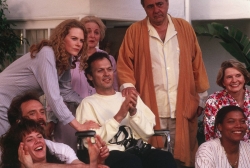 «My Life» (Eng. My Life) — drama by Bruce Joel Rubin starring Michael Keaton and Nicole Kidman in the lead roles.
There are many films and series about life: about how people build relationships, how they meet and part ways, how they quarrel and reconcile, how they achieve things—or fail to—and get upset about it.
But there are few films about death, and not just about death itself, but about dying and accepting it.
In our nation and culture, it has long been unacceptable to openly call things by their true names. If we turn to history and folklore, we’ll see that often things were not named directly: a bear was called “club-footed,” a fox was called “red,” and death itself was never called by its name—it was referred to as “the old woman with the scythe.”
In other words, metaphorically speaking, “let sleeping dogs lie.”
The film My Life is about how the protagonist, Bob, accepts his terminal illness. This film left a lasting impression on me.
The film flows easily, as if in one breath, yet it evokes a range of emotions—from pleasant feelings to tearful states, to outright crying. I must say right away: there is no miraculous healing—the protagonist, played by Michael Keaton, dies by the end of the film.
In our nation and culture, there are typically two types of reactions toward someone who is seriously ill:
1. The severity of their illness is hidden from the patient. Cancer, for example, might be referred to as “an ulcer,” nothing serious, yet the family’s emotions are hard to conceal, and relatives often see that something is wrong.
This leads to misunderstandings, arguments, and mutual resentment.
2. The patient is told about their illness (e.g., “We’ll do it like the West—there, they don’t hide it; they tell you straight away”).
But they forget that what is said is not the main thing; the main thing is support for the patient, conversations with them, and understanding how they might react—crying, screaming, being aggressive, or withdrawing into themselves.
This film moved me because it shows what could be called the “proper” way to experience grief—going through all the stages of grief: denial, anger, bargaining, depression, and acceptance [1].
It is incredibly hard for Bob to leave life behind: a young, successful man, but doubly so because his wife is expecting their first child. He knows he likely won’t live to see the baby’s birth, first steps, or first words. He lives to see his son’s birth, but the character grows weaker as his son grows older.
He finds a way out—he records video messages for his child, sharing stories and commentary on events. In this way, even after his passing, he leaves a piece of himself in the life of his family.
Another crucial moment in the film is Bob’s shift in perspective. The priorities in his life suddenly change—from success and career ambitions to personal relationships: his wife, his child, his father, his brother. Bob begins to communicate with his loved ones on a new, deeper level, without mutual reproaches or accusations, learning simply to be present. He re-evaluates his entire life.
It is also important that he is not left alone with his grief: in his life, there is an external resource—his wife’s support and acceptance, who stands by the protagonist.
Watching the wife, played by a young Nicole Kidman, one comes to understand that this is likely how one should behave toward a seriously ill husband: there was no coddling, no excessive crying, only acceptance and support for her husband in this situation. There was no hiding the severity of his condition from him.
The film does not end with the protagonist’s death. It shows his son growing up, with his mother playing the videos of his father, who reads aloud from children’s books.
We see that there is no hiding the father’s death or his absence from the family. The child grows up knowing from a very young age that his father is not physically present, but he is somehow always there—remembered and cherished.
I recommend this film for quiet, thoughtful viewing—not for entertainment or distraction, but for inner self-reflection. After watching it, I was left with a quiet, yet bright sadness and melancholy.
References:
1 Elisabeth Kübler-Ross. On Death and Dying. Edited by I. Starikh. Literary and artistic edition. Publisher "Sophia," Moscow, 1996 – 111 p.