


 Technological progress and humanity’s perception of the world and itself often do not align. This phenomenon has been confirmed by modern researchers in human psychology (not to be confused with the infamous "British scientists"!).
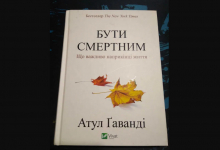
In particular, within the field of medicine, where the absence of an expected treatment result is perceived by doctors as a failure. Yet, "death is not a failure. Death is normal. Death can be an enemy, but at the same time, it is natural" (c). These are the words of Atul Gawande, an American surgeon, endocrinologist, professor at Harvard Medical School and Harvard T.H. Chan School of Public Health, in his candid and sobering book Being Mortal.
Despite all medical advancements and the vast wealth of those who can access them, aging and the gradual decline of bodily functions persist; incurable diseases confine people to bed; accidents leave lasting consequences; and the need for constant care arises without the desire to live in a nursing home.
Having witnessed attitudes toward old age and death in contrasting cultures—modern Western (American) and traditional Eastern (India)—the author examines these perspectives through his own life and professional experience. Gawande draws the reader’s attention to the fact that neither approach is ideal nor devoid of harshness. Each offers valuable insights worth adopting while discarding outdated notions. It is time to acknowledge and accept the reality of aging, decline, and death, and to cultivate a conscious attitude toward this inevitable part of life. This means not surrendering "our final days… to treatments that erode our minds and exhaust our bodies for the sake of a chance at recovery" (c).
Atul Gawande draws on his experience working in the American healthcare system. Some of his observations may evoke envy in Ukrainian readers, while others will provide new insights. For example, the fact that "healthcare professionals have an official classification system for assessing a person’s functional status," specifically eight points for "Activities of Daily Living" and eight points for "Instrumental Activities of Daily Living."
However, the true "characters" of Being Mortal are attitudes and awareness.
The perception of "old age as something wrong" (c) persists because we still fail to recognize that people today live longer and more productively than when the average life expectancy was 40–50 years. The medical definition of "dying" is evolving. A fresh perspective on how this process can be approached is offered by modern hospice care. The necessity for doctors to master the art of what Swedish physicians call "the control conversation." The realization that "there are times when resistance is not worth it" (c).
The author of Being Mortal advocates for respecting the end of a person’s life and their wishes. "Technological society has forgotten what scientists call the 'dying role' and its importance for people at the end of life," writes Atul Gawande.
"People want to share memories… to resolve relationships… They want to conclude their story on their own terms" (c).