


 0% water! If you have a dream but lack confidence—you need to read this!
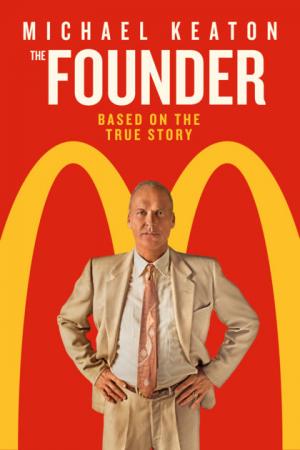
“The Founder” is a biographical film directed by John Lee Hancock about the life of American businessman Ray Kroc and his "thorny path" from a failure to a multimillionaire magnate. It all begins in the 1950s—a time of great beginnings:
→ The birth of rock 'n' roll
→ The development of the "American dream," inventiveness, and various discoveries
→ Hundreds of entrepreneurs scrambling for success
Persistence and a sharp business instinct helped the protagonist keep his home, his wife, and even gain entry into an elite club of state governors. All of this came at the cost of trial and error in his ventures. Yet, like many entrepreneurs, he craved something more. Something big. Something revolutionary. And then luck knocked on his door—in the form of the McDonald brothers.
👨🏼💼🇺🇸 The film shows how necessity forced him to break free from the constraints of a limiting contract, though this would later prevent him from crushing those who had allowed him to become part of someone else’s American dream.
I can’t stop repeating that, for me, business is often legalized robbery with all its inherent attributes: fiction and looting. Products are dummies, contract fraud, securities manipulation, usury, and other wonders of true success. And the protagonist perfectly fits the role of an unscrupulous "dealer."
A true vulture becomes the king of an industry that feeds people artificial products, embodying the living embodiment of unnatural success.
The First Scene.
The protagonist, Ray, passionately convinces the audience of the superiority of a five-spindle milkshake mixer over a single-spindle one, pondering the age-old dilemma: "What came first, the chicken or the egg?" Though he speaks with authority, he’s rejected. Frustrated, Ray moves on to the next client. Another rejection. Another failure.
Evening. A motel. The camera operator points the lens at a reel of affirmations titled "The Power of Positive Thinking." Ray listens to it before bed and in the car throughout the day. Business is going poorly, yet Ray convinces his wife, colleagues, and everyone else that everything is going swimmingly—and demand for his product is sky-high. One day, he’s informed of an order from a fast-food establishment for eight units of his product. Without hesitation, he rushes to the customer on the opposite side of the U.S.
Meeting the Co-Founders.
Upon arrival, Ray is struck by the frenzied line moving swiftly to the cash register—15 seconds, and a food package is already in hand, ready to eat. This surprises him, as he’s used to long waits and receiving the wrong order. He meets the two owners of the McDonald’s restaurant. They give him a tour, showing him how the place operates, and Ray is inspired by the speed, quality, systematic approach, and, above all, the staff’s dedication and coordinated workflow. Over dinner at the restaurant, Ray listens intently as the brothers share the story and philosophy behind their establishment.
It turns out they created the world’s first fast-food service system. Initially, people didn’t embrace the service or the concept, but soon lines of hungry customers formed, eager to pay for the chance to be first in line. The owners remained loyal to their idea, doggedly pursuing their vision.
Ray is captivated by their concept and proposes expanding it into a franchise across the U.S. The brothers refuse, insisting that "quantity over quality" would only dilute their brand. All attempts to persuade them fail because they’d rather have one excellent location than several mediocre ones.
Make It for the Country.
Some time later, Ray returns with a proposal to franchise the concept nationwide. In repeated negotiations, he passionately explains his "theory of success"—that in every state, there are two constants: a church and a school. McDonald’s must become the third pillar of American culture: crosses, flags, and the golden arches. As a result, both parties reach an agreement and sign a contract outlining their obligations.
Relentless Promotion.
Ray begins pitching the franchise to financial institutions to secure funding. Again, he’s met with rejection—until one finally agrees, but only if he puts his house up as collateral. Ray agrees without hesitation, fully believing in his vision. The process is underway.
Aggressive Commerce.
Due to a lack of funds, Ray needs sponsors, specifically Coca-Cola. The partners refuse, claiming they’re not interested in commerce, only the spirit of the establishment. Forced to act alone, Ray clears the area around the restaurant and personally oversees food preparation to maintain quality.
New Franchises.
Midway through the film, we see Ray taking a hands-on approach to hiring. He personally interviews, selects, and recruits staff—only those willing to work tirelessly and truly embrace the restaurant’s philosophy: "McDonald’s is family!"
Out of Money.
Ray is informed that funds have run out, sending him into a panic since he’d mortgaged his house. He tries to secure support from partners, but they refuse, citing contractual limitations. Undeterred, he relentlessly searches for a solution.
One day, he finds a lawyer who suggests creating a real estate company to purchase the land beneath the restaurant. On one hand, it’s a stable passive income; on the other, its value would steadily increase since the new company falls outside McDonald’s jurisdiction.
Victory.
With this idea and a daring move, Ray experiences unprecedented success for the first time in his career. In one of the final scenes, we see the restaurant owners signing an agreement to sell it to Ray for an astronomical sum he can easily afford. In his final address, he declares:
"I’m tired of your endless stream of rejections. If you don’t want to make money, that’s fine—but don’t stand in the way of those of us who do. I understand this business better than either of you. I’m everywhere. I’m international. And you? You’re stuck in the desert. So, I’ll destroy you—but I’ll keep the name because ‘McDonald’s’ sounds American!"
So, how did a failed milkshake and paper cup salesman in his 50s build a fast-food empire with restaurants in every corner of the world, feeding 1% of the planet’s population daily and generating over $1 billion in annual revenue? One word: persistence. Nothing in this life can replace persistence. Not talent—there are countless talented failures in the world. Not genius—an unrecognized genius is almost a cliché. Not education—there are plenty of educated fools around. Only persistence and determination have real power. These key principles helped the protagonist achieve success at an age when most people are thinking about retirement.
Taking is one of the key words in business. No matter what you do—whether selling air or building your own empire—the ability to "take what’s yours" is crucial. And like many other predatory sharks, Ray is no exception. He sees opportunities and knows how to seize them. Though in half the cases, he’s simply lucky. Random acquaintances provide him with everything he needs—he just has to use people at the right time. And he does so successfully. Like a fox in a henhouse, he convinces the brothers, who invented the entire technical concept, to make him a partner. And then it’s just a matter of expanding the franchise until another lucky encounter gives him the idea to cut the brothers out.